Proving Jewish Ancestry for Latvian Citizenship
- Baltic Migration

- Apr 13
- 6 min read
Updated: Apr 28
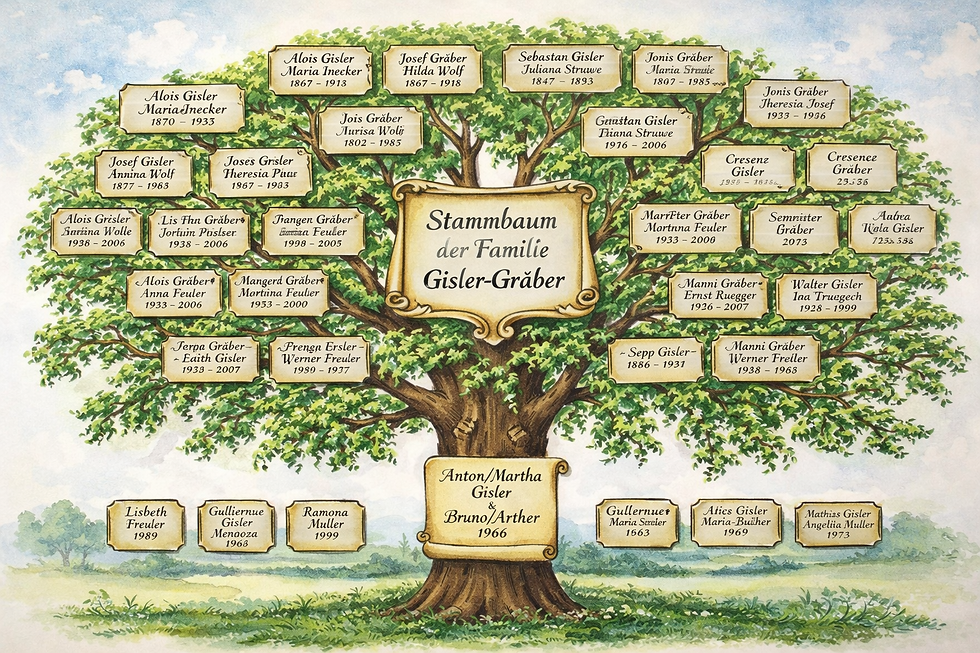
For many families, the hardest part of a Latvian citizenship claim is not the legal principle. It is proving a family story that was disrupted by war, displacement, name changes, and lost records. In Latvian citizenship Jews cases, and especially in Latvia citizenship restoration for Jewish descendants, the right evidence often matters more than the amount of evidence. If you are trying to establish eligibility, understanding which proof of Latvian Jewish ancestry documents carry the most weight can save months of delay.
This is a highly personal process, but it is also a legal one. Citizenship authorities do not decide cases based on family memory alone. They look for a documented line from a qualifying ancestor to the present-day applicant, and they expect that line to be clear, consistent, and supported across different archives and countries.
Latvia citizenship restoration for Jewish descendants
Latvia recognizes certain pathways for descendants of former citizens to restore citizenship, including in cases involving families affected by persecution, forced departure, or the Holocaust. For Jewish descendants, this can be especially significant because many Latvian Jewish families were stripped of stability, scattered across continents, or prevented from preserving formal records in the ordinary way.
That said, eligibility is never based only on ethnicity or family tradition. The key legal issue is usually whether your ancestor was a Latvian citizen or had the right status under Latvian law, and whether you can document your descent from that person. In practice, this means two separate questions have to be answered. First, who was the qualifying ancestor in Latvia? Second, how do you prove the chain of descent from that ancestor to you?
This is where many applicants get stuck. They may know that a grandparent or great-grandparent was a Latvian Jew from Riga, Daugavpils, Liepaja, or another town, but they may not know whether that person held Latvian citizenship, under what name records were created, or which archive now holds the relevant files.
What proof of Latvian Jewish ancestry documents usually matter most
When people search for proof of Latvian Jewish ancestry documents, they often assume they need one perfect certificate that states everything clearly. In reality, most successful cases are built from a combination of records that, together, create a credible legal picture.
The strongest evidence usually starts with civil status records. Birth, marriage, and death certificates can help establish names, dates, places, and family relationships. If these records exist across multiple generations, they help connect the applicant to the Latvian ancestor in a way that authorities can follow step by step.
Beyond that, archival records from Latvia are often central. Depending on the family and time period, useful records may include pre-war passports, residence registrations, census materials, military records, voter lists, school records, tax records, or municipal population files. For Jewish families, synagogue records, community registers, and burial society materials can also help, although their legal value depends on how clearly they identify the individual and link to official state records.
Naturalization files from another country can be just as important. Many descendants have ancestors who later settled in Israel, the United States, Canada, South Africa, the United Kingdom, Australia, or Latin America. Those immigration and naturalization records often name a place of birth, previous nationality, parents, or original spelling of the surname. A foreign file can sometimes solve a Latvian problem, especially when the Latvian archive record is incomplete.
Holocaust-era and refugee records also appear frequently in these cases. Displaced persons files, post-war registration cards, Red Cross tracing documents, survivor testimony collections, and camp records may not prove citizenship on their own, but they can provide crucial identity links. In a case where names changed, dates vary, or whole branches of the family disappeared, these records often help bridge gaps that would otherwise be fatal to the application.
Why Jewish ancestry cases are often more complex
Jewish descendant cases tend to involve a higher level of documentary complexity than standard citizenship-by-descent matters. That is not because the legal path is weaker. It is because the paper trail was more likely to be interrupted.
A single ancestor may appear under multiple spellings in Latvian, Russian, German, Yiddish, Hebrew, or English. A man recorded as Abram in one document may appear as Abraham, Avrom, or even a fully adapted English name elsewhere. Surnames were transliterated inconsistently, and dates of birth were sometimes estimated or altered during migration.
There is also the issue of geography. Borders changed, administrations changed, and archives were reorganized. A record created in interwar Latvia may now be indexed differently than a Tsarist-era record from the same town. Some documents survive only in fragment form. Others exist, but under a version of the name the family no longer uses.
This is why authorities rarely look at one document in isolation. They assess whether the overall record set tells a coherent story. Small inconsistencies can be manageable if the core identity is still clear. Large unexplained contradictions are harder to overcome.
How to build a usable document chain
A practical way to approach these cases is to think in layers rather than hunting randomly. Start with yourself and move backward generation by generation. Your own birth certificate links you to your parents. Their birth and marriage records link them to grandparents. From there, the goal is to identify the ancestor connected to Latvia and prove that this person is the same individual found in Latvian or related archival records.
That sounds straightforward, but the middle generation is often where problems emerge. A grandmother may have married twice. A father may have changed his surname after immigration. A great-grandparent may have used one first name in Europe and another after resettlement. Each of those changes must be documented, not assumed.
The best applications usually include explanatory consistency, not just raw paperwork. If names differ, the file should show why. If a date is off by a year, there should be supporting evidence that the person is still the same individual. If the original Latvian citizenship evidence is indirect, the descent documents need to be especially strong.
Common records that can help prove Latvian Jewish ancestry
The exact mix varies, but the most useful categories often include:
Latvian birth, marriage, and residence records
Interwar passport or citizenship records
Jewish community and synagogue records
Foreign immigration, naturalization, and census files
Holocaust, refugee, and displaced persons records
Name change documents and amended civil certificates
Not every case will need all of these. In some matters, one archival citizenship record plus a clean line of descent is enough. In others, especially where wartime disruption was severe, the case has to be assembled from many smaller pieces.
What causes delays or refusals
The most common problem is not lack of ancestry. It is lack of documentary precision. Applicants often submit family trees, memorial pages, or informal genealogical summaries that are emotionally meaningful but not enough for a legal determination.
Another issue is assuming that a place of birth in Latvia automatically proves Latvian citizenship. It may support the claim, but authorities still need evidence of legal status and family connection. The same applies to Jewish heritage records. They can be highly valuable, but they do not replace the need to prove descent from a qualifying Latvian citizen or status holder.
Translation quality, inconsistent apostilles, missing pages, and unofficial copies can also slow a file down. Even when the ancestry is real and provable, procedural errors can create unnecessary requests for clarification.
When professional support makes a difference
These applications are rarely just about filling out a form. They often require archival strategy, legal framing, and document coordination across several countries. That is particularly true in Jewish descendant matters, where records may be dispersed and identity details may shift across languages and time periods.
Professional support can help determine which ancestor offers the strongest legal route, where records are likely to be found, and how to present inconsistencies in a way that is credible and organized. A well-managed case reduces the risk of building an application around weak evidence while overlooking the records that would actually carry legal value.
For families who have spent years trying to piece this together on their own, structured guidance can also reduce emotional strain. The process is often tied to family loss, interrupted identity, and a desire to restore something that history took away. That deserves careful handling as much as technical accuracy.
How can Baltic Migration help
Does your grandfather, grandmother or any other relative left Latvia during before or after WW2? Claim your Latvian citizenship now.
We offer a free and confidential eligibility assessment.
If you are eligible, we can provide you with a no-obligation quote.
To find out more about citizenship in Latvia, please contact us at anna@balticmigration.com